Guides
Seoul Short-Term Rentals for Foreigners: 2026 Guide
A practical guide to furnished Seoul stays of 7+ nights, including current price ranges, neighborhoods, Residence Card questions, scams, and booking options.
Last reviewed: August 20, 2026. Prices below are planning ranges, not live quotes. Accommodation, lease, and immigration rules depend on the property and the guest's circumstances.
Coming for a semester abroad? Use the dedicated student housing in Seoul guide for exchange students to compare housing types and jump to the right campus guide.
Ready to compare furnished options instead of researching the market? Start with Locali's short-term rentals in Seoul page for 7–27-night stays, or use the monthly rentals in Seoul page for 28 nights and longer.
The quick answer#
| Your stay | A practical starting point | What to check first |
|---|---|---|
| 7–13 nights | Hotel, serviced residence, licensed guest accommodation, or a furnished week-stay | Total after cleaning and service fees |
| 2–8 weeks | Furnished studio, officetel, co-living, or managed apartment | Minimum stay, exact dates, utilities, bedding, cancellation |
| 2–6 months | Furnished rental near work or university | Commute, contract, address documents, deposit, move-out terms |
| 6–12 months | Longer lease or professionally managed residence | Licensed brokerage or legal support where required |
There is no single Korean label that makes every "short-term rental" legal or suitable. The relevant rules can depend on the property type, how it is operated, the length and purpose of the stay, and the agreement being offered. Treat the table as a search guide, not a legal classification.
This guide is for exchange students, visiting professionals, families, creators, and longer-stay travelers who want a furnished Seoul home without immediately entering a conventional multi-year Korean lease. Locali focuses on stays of at least 7 nights. If your target is about four weeks, use the dedicated monthly rentals in Seoul page to compare standardized 28-night totals.
Why this search is harder for foreigners#
Seoul has plenty of furnished housing. Access is the problem.
Many useful listings begin on Korean-language platforms or through Korean-speaking hosts. Availability can change without the public page changing. A price may omit management, cleaning, platform, payment, or currency-settlement costs. Some properties work well for a holiday but cannot provide the documents a long-term student or worker needs.
I understand that friction personally. Before returning to Korea, I spent ten years living in Australia, Germany, and the UK. In each country I was the foreign applicant trying to understand a housing system built around local language, records, and references. Coming home did not make the housing search simple; it only changed which parts were unfamiliar.
That experience is why Locali begins with the guest's real life in Seoul: where they must be, how often they commute, whether they need quiet at night, and what the entire stay can cost. A list of attractive rooms is not enough if none of them works on a Monday morning.
What changed for short stays in Korea#
Airbnb introduced mandatory accommodation-license submission for Korean listings in stages. New listings have required license information since October 2024, and listings created before October 2, 2024 had to submit the required accommodation license by October 16, 2025 to keep accepting qualifying future bookings. Airbnb also notes that requirements vary by property type and municipality. Read Airbnb's current responsible hosting guidance for Korea before relying on an old article or screenshot.
This does not mean every non-Airbnb furnished rental is illegal, or that every Airbnb listing suits every guest. It means the old shortcut of treating all furnished homes as interchangeable accommodation is unreliable.
Before paying, identify which of these you are actually booking:
- Hospitality accommodation such as a hotel, serviced residence, licensed guesthouse, or licensed home-sharing property.
- A furnished rental agreement for a real residential unit.
- Co-living or managed housing with its own membership and service terms.
- A dormitory or school-arranged room governed by the institution's rules.
If an activity requires regulated real-estate brokerage, formal lease negotiation, or legal advice, use an appropriately licensed broker or legal professional. Locali provides furnished-stay search and booking support and coordinates with licensed partners when the requested work crosses that boundary.
The main housing options#
Hotels and serviced residences#
Best for: Short stays, late arrivals, and guests who value front-desk support.
Advantages: International payment, straightforward check-in, frequent cleaning, and predictable service.
Trade-offs: The nightly rate compounds quickly, kitchens and laundry may be limited, and a room that works for a week can feel restrictive for a month.
Furnished studios and officetels#
Best for: Independent stays of several weeks or months.
Advantages: Kitchen, washing machine, workspace, and more privacy than most hotels.
Trade-offs: Terms vary by unit. Public availability may be stale, instructions may be Korean-only, and bedding, utilities, management charges, or deposits may not be standardized.
Co-living#
Best for: Solo guests who want community and a managed building.
Advantages: Furnished rooms, shared amenities, recurring events, and a more predictable operating team.
Trade-offs: Less private space, house rules, and a price premium for common areas and programming.
Hasuk and homestay#
Best for: Students who prioritize budget, meals, or local interaction.
Advantages: Lower entry cost and a household structure that can make arrival easier.
Trade-offs: Shared bathrooms or kitchens, curfews or household rules, and less control over the environment.
University dormitories#
Best for: Exchange and degree students who receive a place.
Advantages: Campus commute, student community, and usually the lowest institutional price.
Trade-offs: Limited inventory, early deadlines, room-sharing, and school-specific restrictions.
If your university offers a dormitory, apply even if you also plan to search privately. A dorm offer gives you a fallback while you compare off-campus options.
What a furnished month in Seoul costs#
The useful number is the guest total for your exact dates, not the rent headline.
On August 18, 2026, Locali's pricing calculator covered 905 active sample-stay records. For a four-week stay, the middle 50% of displayed guest totals ran from approximately $1,190 to $2,084, with a median around $1,652. Very small rooms, premium homes, large family properties, and unusual dates can fall well outside that band.
Those figures are a snapshot of sample records, not confirmed inventory. Locali's displayed Week+ pricing includes payment and currency-settlement cost recovery in the stay price and shows the Locali service fee separately at 10%. The exact candidate, dates, source-platform charges, required property costs, and guest conditions must still be checked.
Build your all-in budget#
Ask for each line before deciding:
| Cost | Questions to ask |
|---|---|
| Stay price | Is it nightly, weekly, four-week, or calendar-month pricing? |
| Management and utilities | Are electricity, gas, water, internet, and building fees included or capped? |
| Cleaning | Is it one-time, mandatory, and refundable if the booking is cancelled? |
| Bedding and towels | Are they included for every guest? |
| Deposit | Who holds it, when is it returned, and what deductions are allowed? |
| Platform or concierge fee | Is it included in the displayed total or added later? |
| Payment and FX | What exchange rate and international-card cost apply? |
Some upstream hosts or licensed partners may require a deposit even when a public listing looks deposit-free. Get the amount, holder, return timing, and damage process in writing. Locali does not treat an unconfirmed sample price as a final quote.
Where to stay in Seoul#
Choose around the trip you will repeat most often. A neighborhood that is exciting on Saturday can become expensive in time and transfers if your campus or office is across the river.
Sinchon and Ewha#
Good for: Yonsei, Ewha Womans University, Sogang, and students who want a dense campus district.
Character: Young, walkable, late-opening restaurants, and practical student services. Hongdae is close without requiring you to live at its busiest center.
For a campus-by-campus comparison, read the housing guide for Yonsei, Ewha, and Sogang students.

Neighborhood guide · Seodaemun-gu
Sinchon
Three universities, one neighborhood. The campus area that runs on student energy.
Explore the guideHongdae and Mapo#
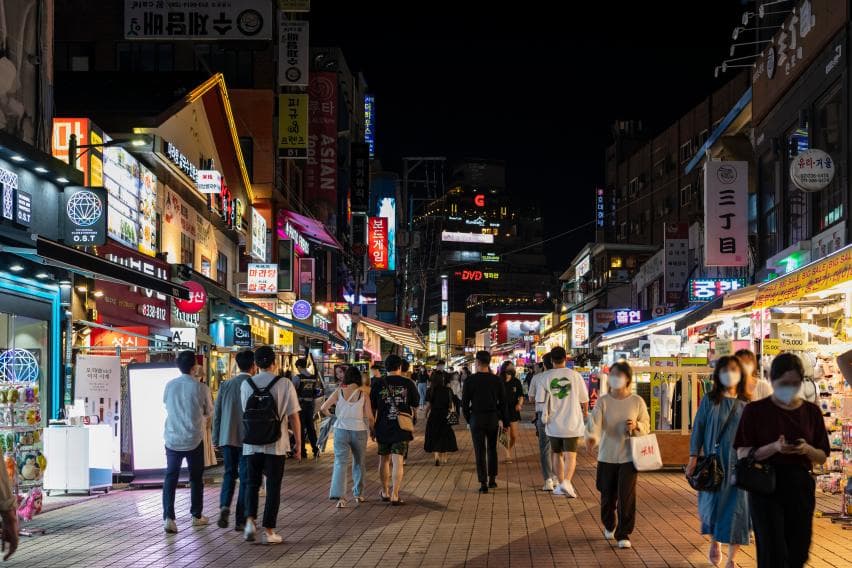
Good for: Creative work, nightlife, airport access, Hongik University, and guests who want an active international district.
Character: Energetic and convenient, but street noise varies sharply block by block. Mangwon or Yeonnam can provide a calmer version of the same general area.
For a campus-specific comparison, read the Hongik University Seoul housing guide.
Neighborhood guide · Mapo-gu
Hongdae
Seoul's youngest neighborhood. Music, art schools, all-night cafés, and street performers.
Explore the guideHyehwa and Jongno#
Good for: Sungkyunkwan University Seoul Campus, central-Seoul study, hospitals, performing arts, and historic neighborhoods.
Character: Hyehwa combines a university district with Daehak-ro theaters, while the wider Jongno area offers more furnished inventory and central transport. Confirm the campus hill and final route rather than relying on the district name.
For a campus and housing comparison, read the Sungkyunkwan University Seoul housing guide.
Studying farther south around Chungmuro or Jangchung? Use the Dongguk University Seoul housing guide.
Neighborhood guide · Jongno-gu
Hyehwa / Sungkyunkwan
A university-and-theater district beside old Seoul and the city wall.
Explore the guideYongsan, Itaewon, and Hannam#
Good for: Central rail access, international communities, embassies, families, and cross-city travel.
Character: Several very different neighborhoods grouped around a central location. Check the hill, station entrance, and last part of the walk rather than relying on the district name.

Neighborhood guide
Yongsan / Seoul Station
Seoul's transit center — with Yongridan-gil's hottest food street as a bonus.
Explore the guideGangnam, Yeoksam, and Samseong#
Good for: Corporate assignments, offices south of the river, premium services, and late-night transport.
Character: Polished and convenient with higher prices. A unit near the correct subway line can be more useful than one physically close on the map.
Neighborhood guide · Gangnam-gu
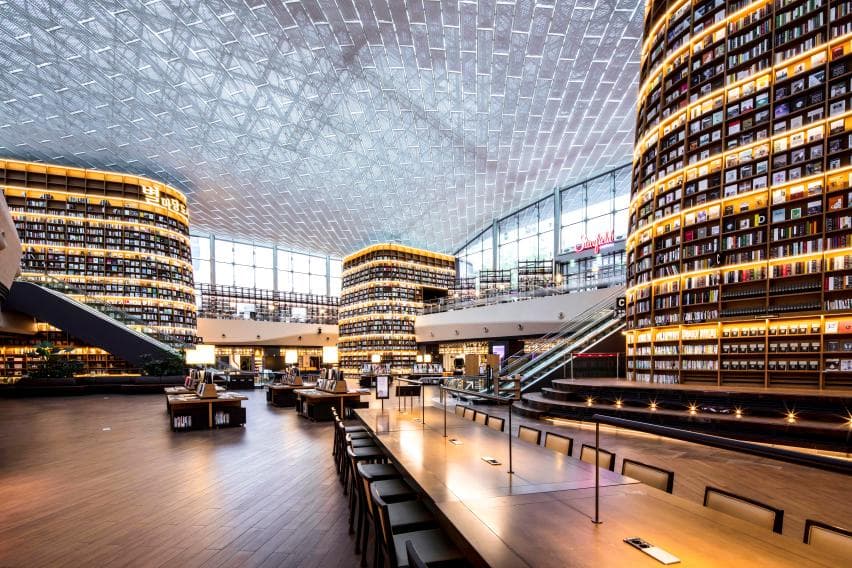
Gangnam
Seoul's business and luxury district. Polished, expensive, twenty-four-hour.
Explore the guideGwanak and Seoul National University#
Good for: SNU exchange students, visiting researchers, and guests who want Line 2 access in southern Seoul.
Character: A broad student living area across SNU Entrance, Nakseongdae, and Sillim. The station name alone does not describe the campus commute, because most routes require a bus or shuttle uphill.
Compare the three main bases in the housing guide for Seoul National University students.

Neighborhood guide · Gwanak-gu
Gwanak / Seoul National University
Student streets below Gwanaksan, with Line 2 access and campus buses uphill.
Explore the guideHeukseok and Sangdo#
Good for: Chung-Ang University Seoul Campus, Soongsil University, and students who want Line 7 or 9 access in southern Seoul.
Character: Hilly university neighborhoods with private rooms, studios, and residential streets. The correct campus gate and final climb matter more than straight-line distance.
Compare Heukseok, Sangdo, Soongsil University Station, and Nodeul in the Chung-Ang and Soongsil housing guide.
Neighborhood guide · Dongjak-gu
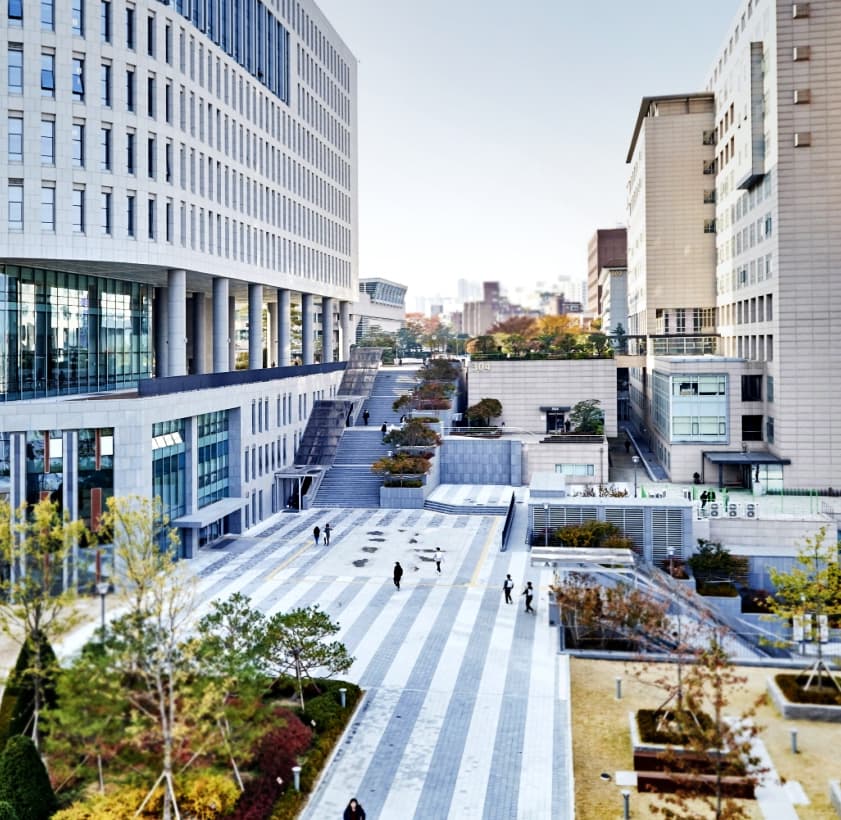
Heukseok / Chung-Ang
A hillside campus neighborhood with Line 9, local food streets, and Han River access.
Explore the guideSeongsu and Konkuk#
Good for: Hanyang University, Konkuk University, creative industries, cafés, and east-Seoul access.
Character: Seongsu is design-led and increasingly expensive; the Konkuk side is more student-oriented and active at night.
For a campus and station comparison, read the housing guide for Konkuk and Sejong University students.
Attending the Seoul Campus west of Seongsu? Read the Hanyang University Seoul housing guide.
Neighborhood guide · Gwangjin-gu
Konkuk / Sejong
Two campuses, late-night food streets, and fast Line 2 access to eastern Seoul.
Explore the guideAnam, Hoegi, and Cheongnyangni#
Good for: Korea University, Kyung Hee University, HUFS, University of Seoul, and guests who prioritize campus commute over tourist proximity.
Character: More residential and often better value than the western university districts, with strong Line 1 and regional rail access around Cheongnyangni.
For a campus-by-campus comparison, read the housing guide for Korea University, Kyung Hee, HUFS, and UOS students.
Browse all current Seoul neighborhood guides and compare commute before selecting a preferred area.
How to book without guessing#
Direct search#
Going directly can work well when you can verify the Korean source and communicate with the operator.
- Confirm that the page represents the exact unit, not a building or room-type example.
- Send exact check-in, check-out, and guest count.
- Request the all-in amount and cancellation terms in writing.
- Confirm bedding, utilities, access, stairs or elevator, and check-in method.
- For a long stay, confirm what proof of residence the operator can provide.
- Read the agreement before transferring money.
Locali Personal Search#
Locali separates free recommendations from paid verification so you can see how we think before committing.
- Send a free brief. Share dates, budget, commute, routine, group size, and deal-breakers.
- Receive three candidate profiles. Within a target of two business days, Locali provides three matched profiles, a concise reason and trade-off for each, and a personalized Seoul setup guide. Exact identifiers, source links, complete photos, live availability, and final totals are not part of the free preview.
- Decide whether to unlock. If the direction feels right, the current founding-guest retainer is $49.
- Locali checks the Korean side. The paid scope includes full candidate details, current availability, all-in price, foreign-guest conditions, replacement candidates when a previewed stay is unavailable, and one refinement round. The target is a verified update or progress update within two business days.
- Approve before booking. No stay is booked and no property payment is made without your approval.
The $49 retainer is credited dollar-for-dollar toward Locali's final 10% concierge service fee, subject to a $200 minimum total service fee. Stay price, host charges, upstream-platform charges, licensed-partner fees, and optional hands-on arrival services are separate unless the written offer says otherwise. Review the current pricing and concierge terms before paying.
Residence Card and address documents#
"ARC" is still widely used in conversation, but Korean authorities now use Residence Card in English. Foreign nationals intending to stay in Korea for more than 90 days generally need foreigner registration within 90 days of entry, subject to visa-specific rules and exemptions. Seoul's official foreigner-registration overview explains the general timeline.
Do not assume that a property can support registration because it is called an apartment, officetel, hotel, or Airbnb. The required proof and the operator's ability to provide it depend on your status of stay and accommodation arrangement.
Before booking a long stay:
- Ask your school or employer which documents your visa case requires.
- Ask the accommodation provider exactly which proof of residence they will issue.
- Keep the answer in writing.
- Confirm the current requirement with the Korea Immigration Service 1345 Immigration Contact Center.
Use the dedicated Korea Residence Card housing-document guide for arrangement-specific checklists. Locali can help organize questions and preparation, but government agencies make the eligibility and approval decisions. This guide is general information, not immigration or legal advice.
Scam and mistake prevention checklist#
The most common losses come from urgency plus missing documentation, not from one recognizable scam format.
Before sending money#
- Confirm the exact property and the identity or authority of the person offering it.
- Compare the address, room layout, windows, and building details across the available evidence.
- Request a live or recent walkthrough when an in-person viewing is impossible.
- Get dates, total price, cancellation, deposit, and refund conditions in writing.
- Avoid payment instructions that suddenly move away from the platform or named contracting party.
- Do not interpret a social-media profile, passport image, or business card as proof of authority by itself.
At check-in#
- Record timestamped photos or video of walls, floors, furniture, appliances, and existing damage.
- Test locks, hot water, heating or cooling, Wi-Fi, and essential appliances promptly.
- Report discrepancies in writing while the evidence is current.
- Keep payment receipts, the agreement, listing screenshots, and messages together.
Claims that deserve a pause#
- "This price is only available if you transfer today."
- "The contract comes after payment."
- "The exact unit is assigned at check-in."
- "The deposit rules are standard, so they do not need to be written down."
- "You can definitely register this address" without naming the document provided.
No platform or concierge can remove every housing risk. The practical goal is to make the unit, contracting party, money flow, and remedies clear before commitment.
Frequently asked questions#
How far in advance should I search?#
For semester starts, large family homes, and stays with strict commute or document requirements, begin six to ten weeks ahead. For flexible one-person stays outside peak periods, two to four weeks may be enough. Starting earlier improves choice but does not make current availability permanent.
Do I need a Korean phone number or bank account?#
It depends on the platform and payment route. Some Korean services use local identity, phone, or payment checks; others support international guests. Verify the current signup and payment requirements rather than assuming every Korean platform works the same way.
Are utilities included?#
Often, but not always. Ask whether electricity, gas, water, internet, and management are included, separately billed, or capped. Seasonal heating and air-conditioning can materially change the total.
Can I cancel or move out early?#
Only according to the specific agreement and applicable mandatory rights. Do not rely on a general market rule. Read the cancellation tiers, service-fee treatment, cleaning-fee treatment, and early-checkout terms before payment.
Is furniture always included?#
Furnished listings normally include the major items shown, but cookware, bedding, towels, desk chairs, and storage vary. Confirm what will be in the exact unit on your dates.
Can I bring a pet?#
Pet-friendly homes exist, but approval may depend on species, size, number of pets, cleaning charges, and building rules. Get approval for your specific pet in writing.
Does Locali guarantee that a sample stay is available?#
No. Sample Stays are examples for exploration and price orientation. Locali checks source status, exact dates, availability, final guest total, and foreign-guest conditions before you decide whether to proceed with a candidate.
A better way to start#
You do not need to choose the perfect Seoul neighborhood before asking for help. A useful brief answers five questions:
- What are your exact or flexible dates?
- Where must you reach, and how often?
- What is your total accommodation budget?
- Who is staying, and what space do they need?
- Which trade-offs are unacceptable?
With those answers, price and neighborhood become a solvable comparison instead of an endless feed of rooms.
Start by exploring Sample Stays, compare the neighborhood guides, or send a free brief for three matched candidate profiles and the reasoning behind them.
Locali is a Seoul furnished-stay search and booking concierge for foreign guests staying 7 nights or more. Public listings and free candidate profiles are not guaranteed inventory or final quotes. Current availability, final pricing, and guest conditions are checked before commitment. Regulated brokerage and legal services are handled only through appropriately licensed partners.

Written by
Simun Yang
Simun lived abroad for 10 years (Australia, Germany, UK) before returning to Korea to build Locali. He writes about housing, language, and the foreigner experience in Seoul.
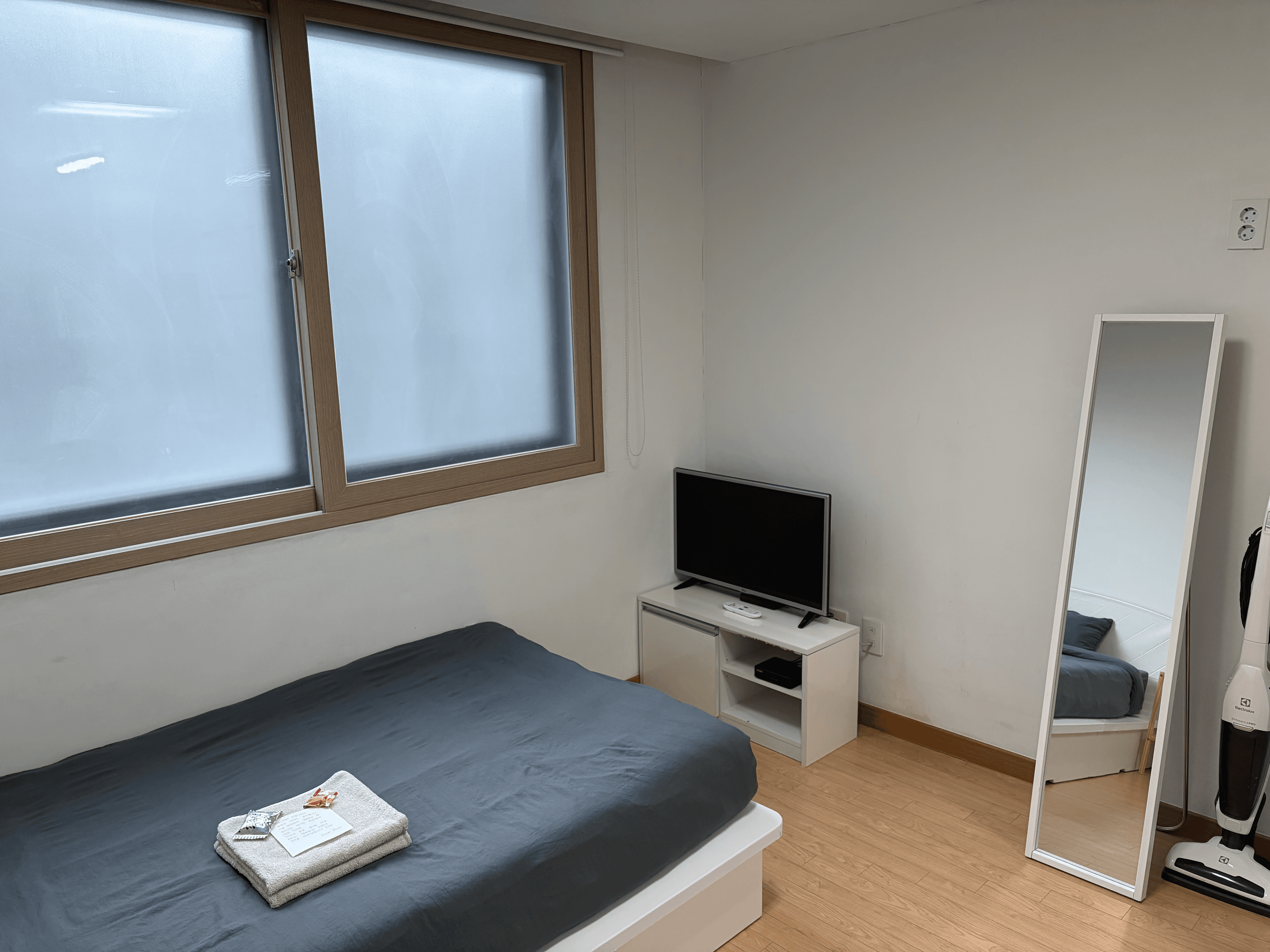
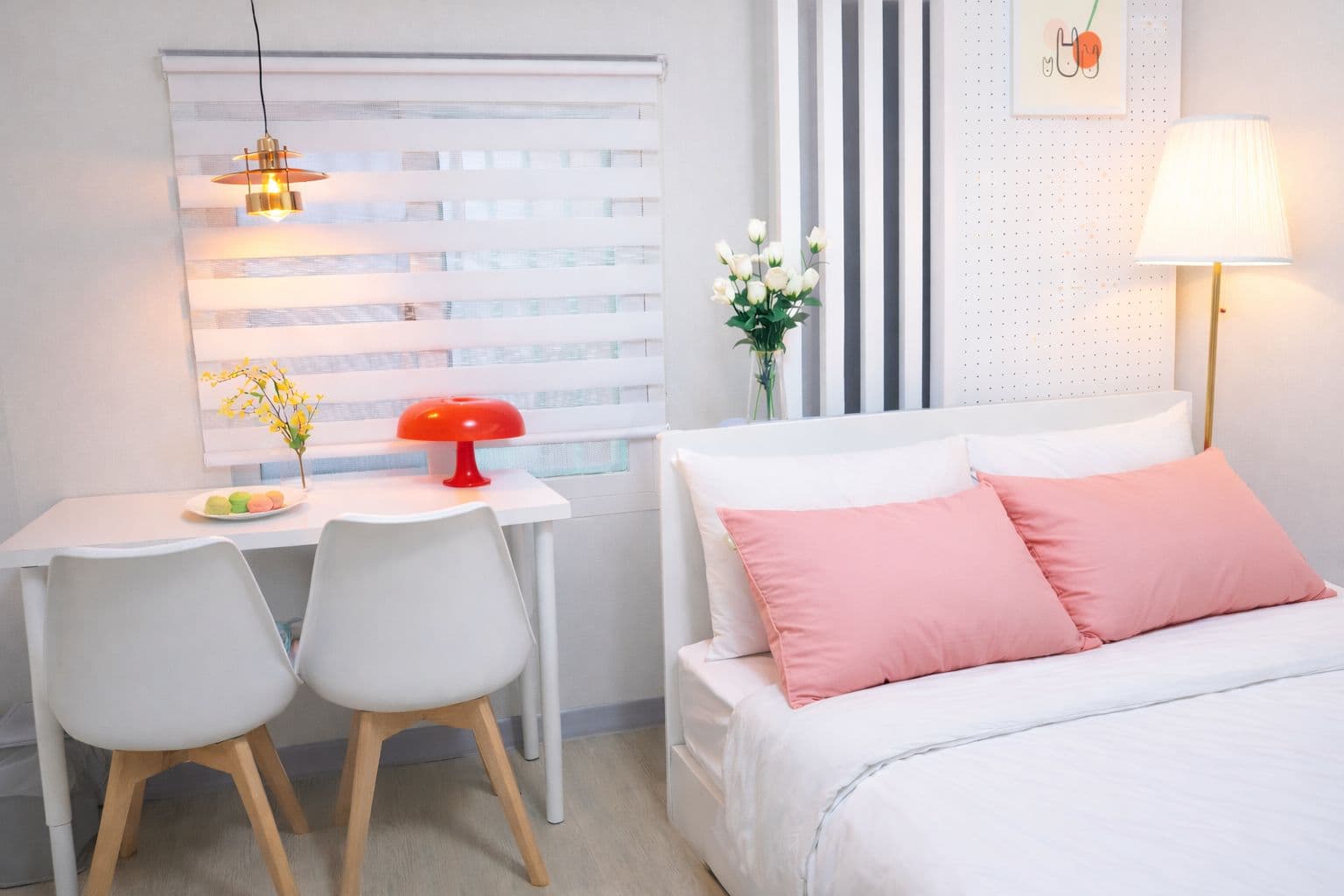
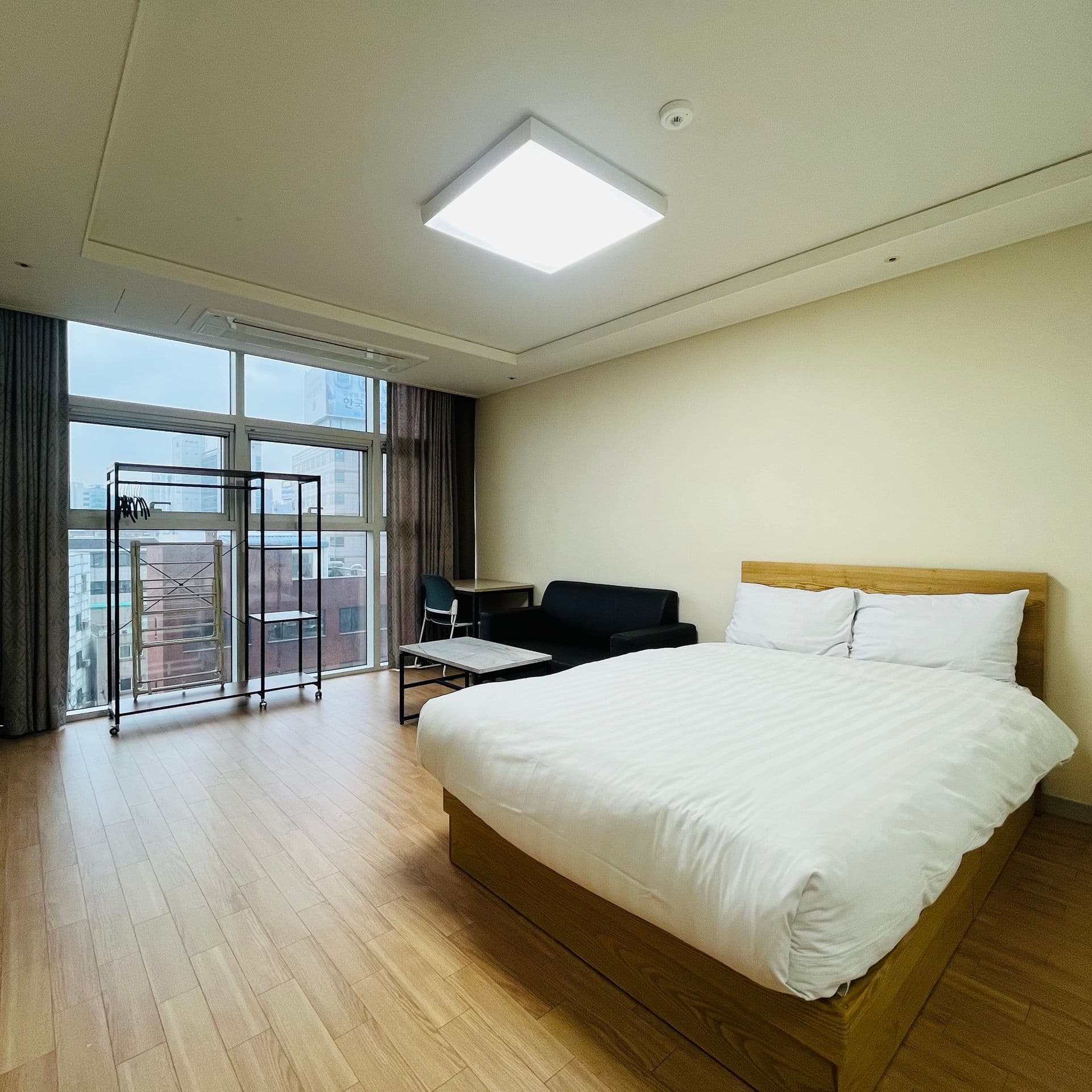
Stays in this story
Keep reading
Guides
Student Housing in Seoul for Exchange Students: 2026 Guide
August 20, 2026 · 10 min read

Guides
How to Verify a Korean Rental Listing Isn't a Scam: A 12-Point Field Guide for Foreigners
May 19, 2026 · 10 min read

Guides
Korea Residence Card Housing Documents: Proof of Residence Guide (2026)
August 21, 2026 · 12 min read